

Zwift Platform Review
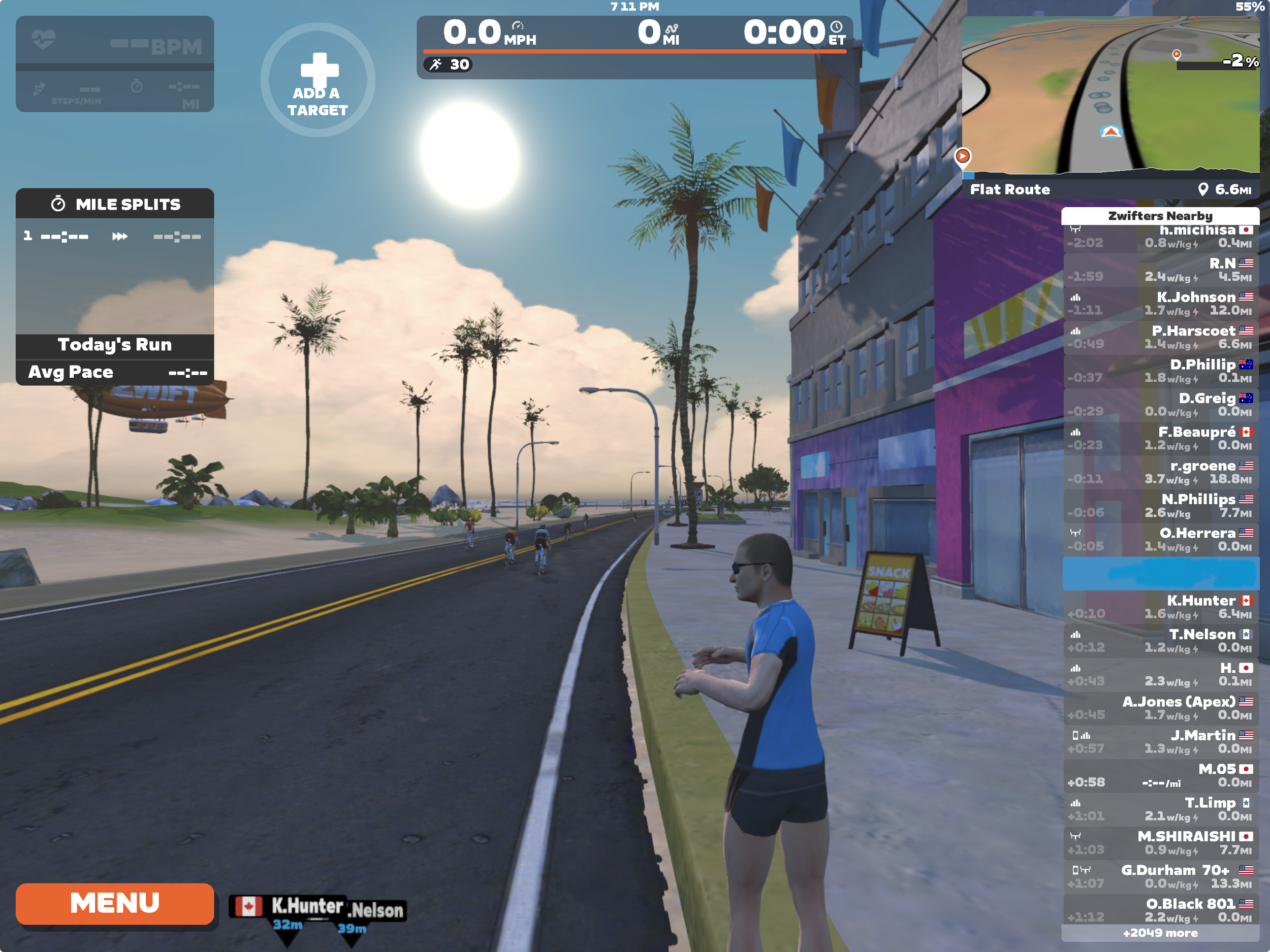
Getting ready for a run in Zwift
If you only have a minute
Zwift is the most feature-rich, social, and polished indoor-cycling and running virtual platform on the market. It blends game-like worlds, structured training, events, and a huge active community into one subscription service. It’s not perfect — subscription cost, occasional server issues, and continued complexity for beginners are real drawbacks — but for riders and runners who want motivation, variety, and social rides/races that feel alive, Zwift remains the top choice. Below I walk through the experience, the features, the tech, the pros and cons, and who should (or shouldn’t) subscribe.
What Zwift is (and isn’t)
Zwift is an indoor-training platform that turns your trainer/treadmill sessions into a virtual world where you can ride or run, follow training plans, join group rides and races, earn in-game rewards, and track progress over time. It combines realistic resistance control for smart trainers with social features (friends, Ride Ons, events) and a huge library of workouts and training plans. It’s primarily a subscription app rather than a one-off purchase — you pay monthly or annually for access to Zwift’s worlds and features.
First impressions & onboarding
Starting Zwift is straightforward for someone who already owns a trainer or treadmill: install the app (PC, Mac, Apple TV, iOS/Android), pair sensors (power, cadence, speed, heart rate), choose a workout or free ride, and go. For complete newcomers, there’s some friction: choosing the right pairing method (ANT+ vs Bluetooth), picking a realistic trainer setup, and calibrating power/FTP can feel technical. Zwift mitigates this with a Companion app that handles invites/events and an extensive help site, but expect a short learning curve.
Worlds, graphics, and immersion
Zwift’s visual worlds (Watopia, London, New York, London, Innsbruck, and many event-specific maps) are colorful and varied. The company has continued to invest in map expansions — for example, a significant New York map expansion added dozens of kilometers and new routes in recent updates — which keeps the environment fresh and gives long-term users new roads to explore. The graphics aren’t photorealistic like a AAA game, but they’re clean, performant, and designed to highlight rides/races rather than aim for a cinematic experience. If you want cinematic rides filmed on actual roads with real video, Zwift is different — Zwift trades realism for interactivity, gamification, and live multiplayer.
Training, workouts, and plans
Zwift shines as a training platform. It offers:
Thousands of pre-built workouts and dozens of multi-week training plans (base, build, specialty) that adapt to progress.
Custom workout editor and the ability to import workouts.
Structured workouts that automatically control smart-trainer resistance (ERG mode) to hit intervals precisely.
Integration of training metrics (power, power zones, TSS-like measures in the app) so you can see progress over time.
The workout ecosystem is mature and flexible — whether you’re a coach, a racer, or a time-crunched rider wanting 45-minute threshold sessions, Zwift can handle it. Many athletes use Zwift as their primary training platform and pair it with external analysis tools (e.g., TrainingPeaks, Strava).
Social features, events, and races
Where Zwift separates itself from many competitors is the live community: group rides, structured group workouts, mass-participation events (tours and challenges), and racing across every ability level. The Companion app makes joining and organizing easy. Community aspects — cheering, drafting, leaderboards, and the psychological pull of not wanting to miss a group ride — provide strong motivation and accountability.
Zwift’s racing scene is particularly deep: grassroots races to national and world-championship style events are run on the platform. This social layer is the main reason many users keep paying after their training goals are met.
Hardware ecosystem & integrations
Zwift connects to a wide range of smart trainers, bikes, power meters, speed/cadence sensors, and treadmills. It runs on Windows/Mac, iOS/Android, and Apple TV (a common standardized living-room setup). Zwift has also introduced hardware initiatives (for example, Zwift-branded additions like the Cog & Click system) intended to make steering and in-game interaction easier from real handlebars, widening the “handlebar-as-controller” experience. The platform supports both Bluetooth and ANT+ (on compatible devices), and it will take trainer-controlled power/ERG signals when available.
Practical note: device compatibility and the number of supported setups are large, but the best user experience typically comes from smart trainers that can be controlled directly by Zwift. If you’re starting from scratch, budget for a trainer that supports direct power/resistance control — it dramatically improves workouts and races.
UX, Companion app, and data flow
Zwift’s core app is your immersive window, while the Companion app is the control hub: send invites, join events, manage group workouts, and see live results. The desktop/mobile split is well-executed: you can run Zwift on an Apple TV (streamlined) and use your phone for the Companion interface. The app UX has matured — settings are clearer, pairing is more robust than in early days, and new features (ride frames, data display customization) are added on a regular cadence.
Pricing & value
Zwift moved from a lower-cost model to a higher subscription in 2024; at time of writing, Zwift’s public pricing shows monthly and annual options with the annual plan billed around $199.99/year for the US and a monthly option around $19.99 (prices vary by country and change over time). Zwift offers trial periods for new users (14-day free trial) and the company sometimes provides promotional pricing or gifts with smart-trainer purchases. Pricing is a key friction point for many — users who use the platform daily often find continued value, while casual users may balk at the ongoing fee compared with one-time purchases or free alternatives.
Bottom line: if you use Zwift multiple times per week, benefit from structured plans, and enjoy the social ecosystem, it’s easy to justify the subscription. If you only ride inside occasionally, it’s a tougher call.
What Zwift does well
Community & motivation — nearly unparalleled calendar of group rides, races, and events that keep users engaged.
Structured training + automation — ERG-mode workouts and adaptive plans are excellent for disciplined training.
Active development — regular map expansions, feature rollouts, and hardware integrations (e.g., Cog & Click) show continued investment.
Cross-device availability — runs on multiple platforms including Apple TV for living-room setups.
Where Zwift falls short
Cost sensitivity — the subscription price increase in 2024 and subsequent regional price points have made some users vocal about cost; it’s now a material subscription on an annualized basis.
Technical complexity for beginners — pairing sensors, choosing the right setup (roller vs direct-drive trainer vs treadmill), and calibrating power add friction to entry.
Server/load occasional hiccups — large events can sometimes show latency or match-making issues; community threads discuss intermittent outages or delays during major drops. (This is an operational reality for all large multiplayer platforms.)
Graphics vs realism tradeoff — if you prefer real-video rides (e.g., RGT’s video-based routes or other apps with filmed courses), Zwift’s stylized worlds may feel less “authentic.”
Who should use Zwift?
Serious cyclists/triathletes who want structured workouts and social rides/races.
Motivation-driven people who need group rides, gamification, and progression (levels, unlockable kit).
Coaches and coached athletes who want to assign and monitor consistent workouts with ERG control.
People with families who want a living-room-friendly solution (Apple TV + trainer is a compact, easy-to-turn-on setup).
Who might skip it:
Casual riders who only do a handful of rides per month and hate subscriptions.
People who prefer filmed, real-world video rides above gamified virtual worlds.
Tips to get the best out of Zwift
Use a smart trainer that supports direct resistance control (ERG) — it makes workouts accurate and racing fair.
Run Zwift on a PC or Apple TV for best performance; smaller phones can struggle with rendering and battery.
Learn basic pairing and calibration before your first big group ride so you don’t scramble at the start line.
Use the Companion app for invitations and event scheduling — it’s essential for social features.
Recent developments worth knowing
Zwift continues to expand its map content (recent New York expansion added new routes and features) and has introduced hardware-focused features like Zwift Cog & Click to make the experience more integrated with real handlebars. The platform has also adjusted pricing in recent years, which is an important factor when calculating long-term value. If you plan to subscribe, check Zwift’s official pricing page and current announcements, since offers and regional pricing can change.
Alternatives (brief)
There are alternatives that target specific niches — e.g., pure training-focused platforms, video-based scenery apps, or free social ride options — but few match Zwift’s combination of social depth, training tools, and constant content refresh. If your primary need is structured training without the world-building, you might compare TrainerRoad or The Sufferfest; for video-based realism, other platforms emphasize filmed routes. Always compare trial periods, required hardware, and total annual cost before switching. (If you want I can lay out a side-by-side comparison.)
Final verdict
Zwift is the closest thing to a complete indoor cycling/running ecosystem. Its strength is the interplay of structured training, multiplayer events, and continuous content updates that turn repetitive indoor hours into a social, rewarding experience. If you ride or run indoors multiple times per week and want motivation, accountability, and a living community of riders/runners, Zwift is worth the subscription. If you ride infrequently or object strongly to recurring fees, you’ll want to evaluate alternatives or look for promotional access bundled with hardware purchases.

Zwift running track